.svg)
"Safer" Eye Drops May Actually Be at Higher Risk of Contamination
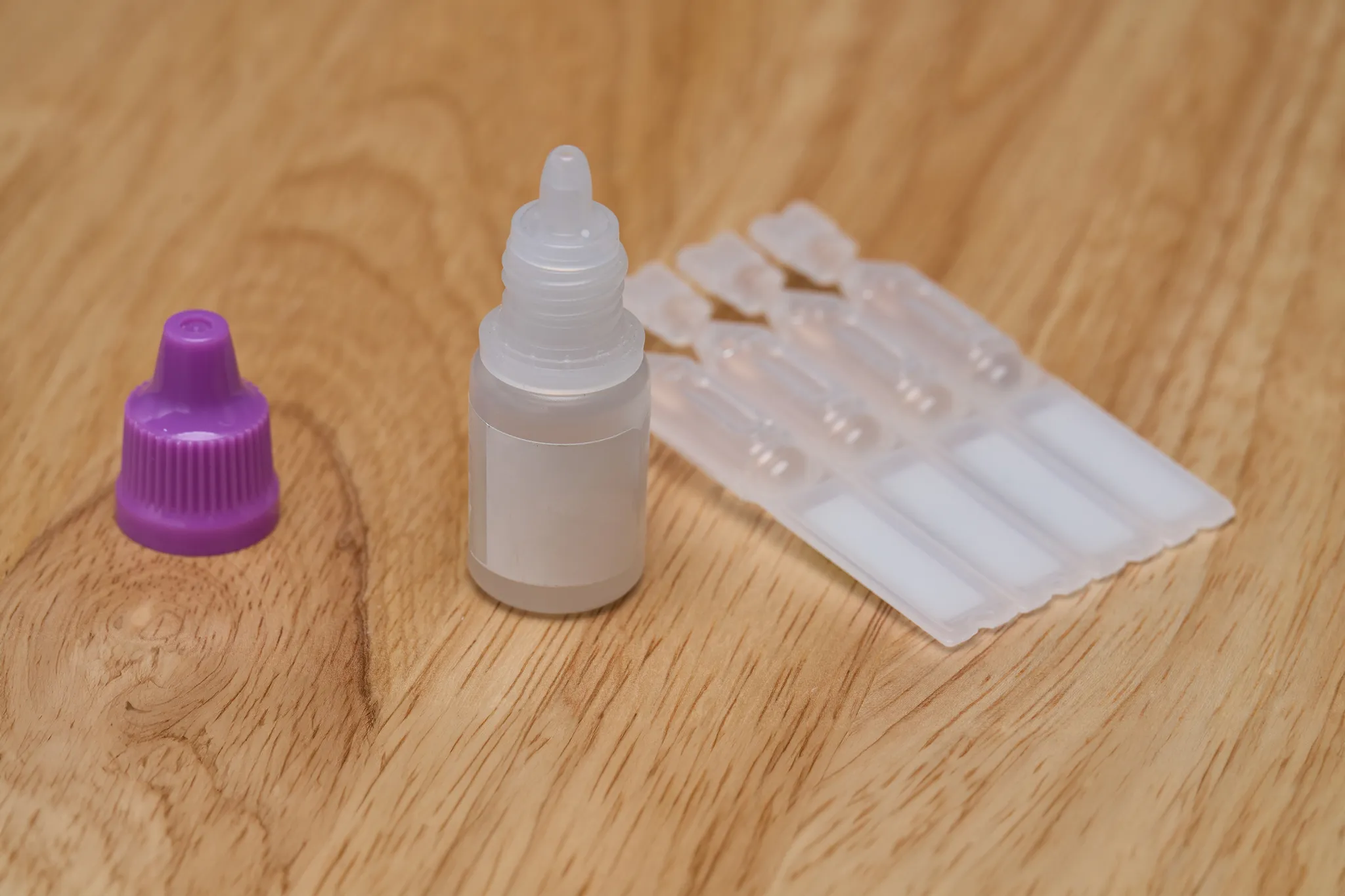
Many patients switch to preservative-free eye drops because their doctor told them they were gentler on the eyes. What nobody mentions is that removing the preservative also removes one of the few things standing between the eye drop solution and harmful bacteria.
It's a real tradeoff, and most patients using preservative-free drops don't even know it exists.
Why Preservatives Were There in the First Place
Standard multi-dose eye drops contain preservatives like benzalkonium chloride (BAK) for two reasons: to protect the liquid inside the bottle from contamination and to extend shelf life. BAK reduces contamination and keeps your drops good for longer.
The problem, however, is that BAK is hard on the ocular surface. Long-term use is linked to chronic inflammation, goblet cell loss, tear film instability, and in some patients, worsened dry eye. For patients using drops daily for conditions like glaucoma, that daily chemical exposure adds up. Ophthalmologists began recommending preservative-free formulations for exactly this reason.
What the Research Shows
Studies on preservative-free eye drops in multi-application containers have found contamination rates ranging from 8.4% to over 28%1,2. One study collected bottles from inpatients and outpatients and found that, after just three to seven days of use, 8 out of 95 bottles came back positive for bacterial growth. The organisms isolated included Staphylococcus aureus, Klebsiella oxytoca, Enterobacter cloacae, and Serratia species, none of which belong anywhere near your eye.
Contamination doesn't only occur inside the solution, it can happen on the dropper tip too. Every time you open the bottle and expose the nozzle to air or touch the tip to your eyelid (even slightly), the opportunity for contamination grows. Without preservatives in the solution to slow that growth, any bacteria that land on the nozzle have fewer barriers between them and the liquid itself.
The Single-Use Vial Problem
The standard answer to preservative-free contamination risk is the unit-dose vial: a small, single-use plastic container that, in theory, is opened once, used once, and thrown away.
In practice, however, many patients reuse unit-dose vials. They that if the solution looks clear and smells fine, it's still safe. They recap the vial and use it again the next day, which eliminates much of the protection single-use packaging was designed to provide.
Single-use vials also generate a significant amount of plastic waste, which is prompting some clinicians to reconsider whether multi-dose packaging might be preferable, especially if contamination risk can be addressed.
Who Faces the Highest Risk?
All patients who use preservative-free drops aren't at the same level of risk of contamination-related conditions. Those who consistently use eye drops multiple times a day face significantly more risk. This includes patients with conditions such as glaucoma and dry eye, post-surgical patients, and contact lens wearers.
Patients with glaucoma are typically in this category. Multiple studies have found bacterial contamination in glaucoma medication bottles3. The hospital environment introduces gram-negative bacteria that are less commonly found in home settings and are considerably more dangerous.
Post-surgical patients are particularly vulnerable during the 2-4 weeks after cataract surgery or corneal transplantation, when antibiotics suppress the native ocular microbiome and leave the eye’s surface open to opportunistic bacteria.
Contact lens wearers face heightened risk too. Lenses shift the microbial balance of the ocular surface toward gram-negative bacterial species and create surfaces where biofilm can form. Adding contaminated drops to that environment raises the risk of conditions such as substantially.
Current Solutions
Preservative-free drops address one problem, the chemical toxicity from BAK, while creating a more overlooked one. However, some solutions do exist to significantly reduce a large portion of the contamination risk associated with preservative-free drops.
Redesigned bottles with filter systems or one-way valves protect the internal liquid but don't address external nozzle colonization, which is where contamination primarily occurs. However, they do not prevent dropper tip contamination which is where droppers are most prone.
This is the gap that the Saniteyes disinfection system was built to address. Rather than adding chemicals back to the solution, Saniteyes uses UV-C light (254–280 nm) to disinfect the nozzle exterior before each use. In testing, a 5-minute Saniteyes cycle achieved a 99.999+% reduction of bacterial and fungal organisms, with no chemical residue and no risk of medication alteration, since UV-C light can’t penetrate standard medical-grade polyethylene. With this technology, the medication stays stable and the nozzle stays clean.
For patients who rely on preservative-free drops long-term, nozzle hygiene isn't optional. It's the missing step for healthy eyes long-term.
.webp)