.svg)
Eye Drop Recalls: Is Your Medicine Cabinet Safe?
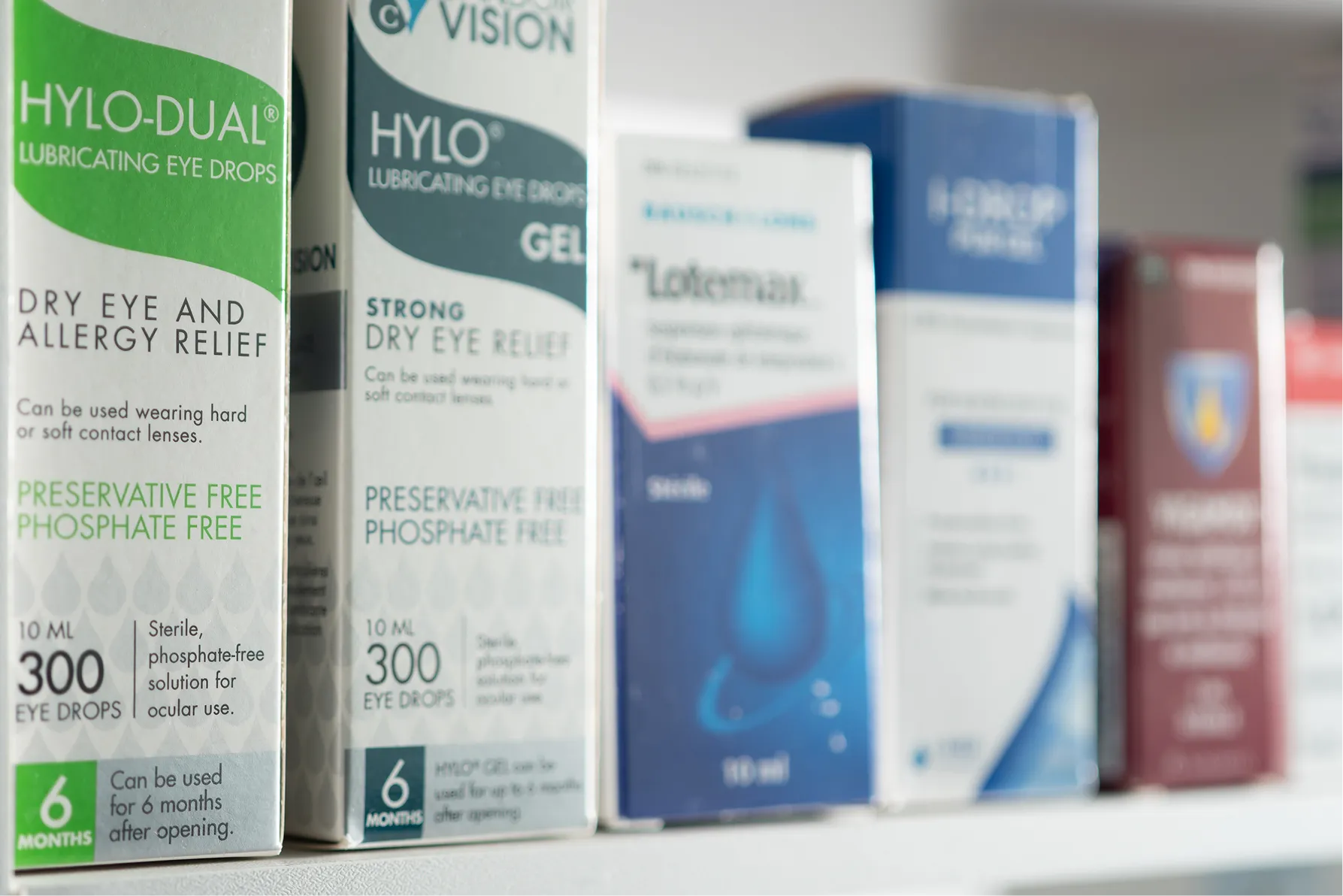
Defective eye drops can quietly make chronic conditions worse. Bottles contaminated with bacteria, or manufactured without sterility assurance, can turn an everyday relief medication into the source of irritation, infection, or lasting damage to the ocular surface.
Over the past several years, over-the-counter eye drops and ophthalmic gels have been recalled across major retailers and regional grocery chains for reasons that range from potential bacterial contamination to manufacturing quality lapses. Affected products often sit on shelves under generic store-brand names that consumers don't recognize as risky.
If you use eye drops regularly, especially for Dry Eye Disease or post-surgical care, it's worth cross-referencing what's in your medicine cabinet against current safety data.
Recent Recalls at a Glance
A non-exhaustive timeline of major OTC eye drop and ophthalmic gel recalls since 2023.
| Month | Company | Products | Retailers |
|---|---|---|---|
| July 2026 | Prestige Brands Holdings (Clear Eyes) | Clear Eyes Maximum Itchy Eye Relief, 0.5 fl oz (15 mL) | Nationwide |
| July 2026 | Lupin Pharmaceuticals | Prednisolone Acetate Ophthalmic Suspension, USP, 1% (5 mL, 10 mL, 15 mL) | Nationwide, prescription only |
| March/April 2026 | K.C. Pharmaceuticals | Best Choice, Quality Choice, GoodSense, CareOne, Equaline, TopCare, Health Leader, Foster & Thrive, Rugby | CVS, Walgreens, Target, Rite Aid, Kroger, H-E-B, Meijer |
| May 2025 | BRS Analytical / AvKARE | Artificial Tears, Carboxymethylcellulose Sodium Ophthalmic Gel 1%, Carboxymethylcellulose Sodium Ophthalmic Solution, Lubricant Eye Drops, Polyvinyl Alcohol Ophthalmic Solution | Various distributors |
| September 2024 | Allergan | Refresh P.M., Lacri-Lube | Nationwide |
| February 2024 | Brassica Pharma | Equate, Up & Up | Walmart, Target, CVS |
| November 2023 | Kilitch Healthcare India (27 store brands) | Rugby, Leader, CVS, Rite Aid, Target, and Walmart store brands | CVS, Rite Aid, Target |
| August 2023 | Dr. Berne's MSM Drops | All | Online |
| August 2023 | LightEyez MSM Drops | All | Online |
| March 2023 | Apotex | Brimonidine Tartrate Solution (0.15%) | Pharmacies nationwide |
| February 2023 | Global Pharma | EzriCare, Delsam Pharma | Amazon, Walmart, Online |
| February 2023 | Clear Eyes | Once Daily Relief | Nationwide |
2026 Clear Eyes Maximum Itchy Eye Relief Recall
Nearly 40,000 bottles of Clear Eyes Maximum Itchy Eye Relief were recalled by the U.S. Food and Drug Administration (FDA) due to a "lack of assurance of sterility." While these drops may be safe to use, the manufacturer cannot guarantee they are free from all bacteria and fungi. It is recommended to stop using these products and request a refund.
How to Check Your Bottles
Three things must match for a bottle to be part of the recall:
- NDC or UPC code. Printed on the front or bottom of the medication box from the pharmacy. This identifies the product family.
- Lot code. Printed on the bottom of the box and on each eye-dropper bottle label, for example LT24, RG24, HA01120, or 2552A.
- Expiration date. Also printed on the box and each bottle. Must match one of the listed dates exactly.
If all three attributes match, stop using the drops immediately. You can return the bottle to your retailer for a full refund.
Use the checker below to look up your product by NDC code, UPC code, brand, or retailer.
Recall Checker · FDA recalls · 2026
Check if your eye drops are affected
Enter your NDC or UPC code, or search by brand or retailer. You can find this code on the front or bottom of your medication box.
No recalled product matches your search. If you cannot find your code, check the bottom of the bottle box, or contact the retailer where you purchased it.
Sources: FDA enforcement reports for Prestige Brands Holdings / Clear Eyes (July 2026), Lupin Pharmaceuticals (2026) and K.C. Pharmaceuticals (March 2026).
What to Do If Your Drops Are Affected
- Stop use immediately. Do not finish the bottle.
- Return it to the retailer where it was purchased for a full refund — no receipt is required for FDA-mandated recalls.
- If you've experienced any symptoms (irritation, redness, pain, blurred vision, discharge), contact your eye care provider.
- Report adverse events to the FDA's MedWatch program at fda.gov/medwatch.
Proper bottle hygiene between uses is one of the most effective ways to reduce contamination risk regardless of manufacturer. Visit our other articles to learn more about how to keep your drops safe.
.webp)