.svg)
Are Your Artificial Tears Hurting Your Eyes?
Are Your Artificial Tears Hurting Your Eyes?
If you use artificial tears daily and your eyes are still irritated and uncomfortable, you've probably blamed the drops for being ineffective or assumed your dry eye is just progressing. That's a reasonable assumption, but it may also be wrong.
There could be another culprit worsening your symptoms that rarely gets discussed: your bottle.
Dry Eye and the Contamination Math
Artificial tears are one of the most commonly used eye drop products in the world. Dry eye disease affects at least 16 million adults in the United States alone. Most of these patients use multi-dose bottles every day for months or years. This is important because contamination risk scales with time and frequency. Studies of in-use eye drop bottles found that nozzle contamination rates range from 7.7% to 100% depending on the study setting, how long the bottles had been open, and how they were stored.
The bacteria most commonly found on dropper tips usually live on your hands and eyelids. When the bottle tip touches your lashes or lids (even briefly, even accidentally), those organisms transfer and multiply on the nozzle, where they come into contact with your drops every time they're used.
What Bacteria on Your Nozzle Actually Does
Your eye is not sterile. A healthy ocular surface hosts a low-biomass microbiome dominated by beneficial bacteria that maintain barrier function and suppress opportunistic pathogens.
The balance of bacteria can be disrupted, in a process known as ocular dysbiosis, when continuous low-level exposure of foreign bacteria occurs. This is exactly what happens when a contaminated dropper tip deposits bacteria onto the ocular surface with every drop.
In patients already dealing with dry eye disease, the ocular surface is already inflamed, osmolarity is elevated, and the tear film is unstable. This environment allows harmful bacteria to thrive and adding contaminated drops does exactly that.
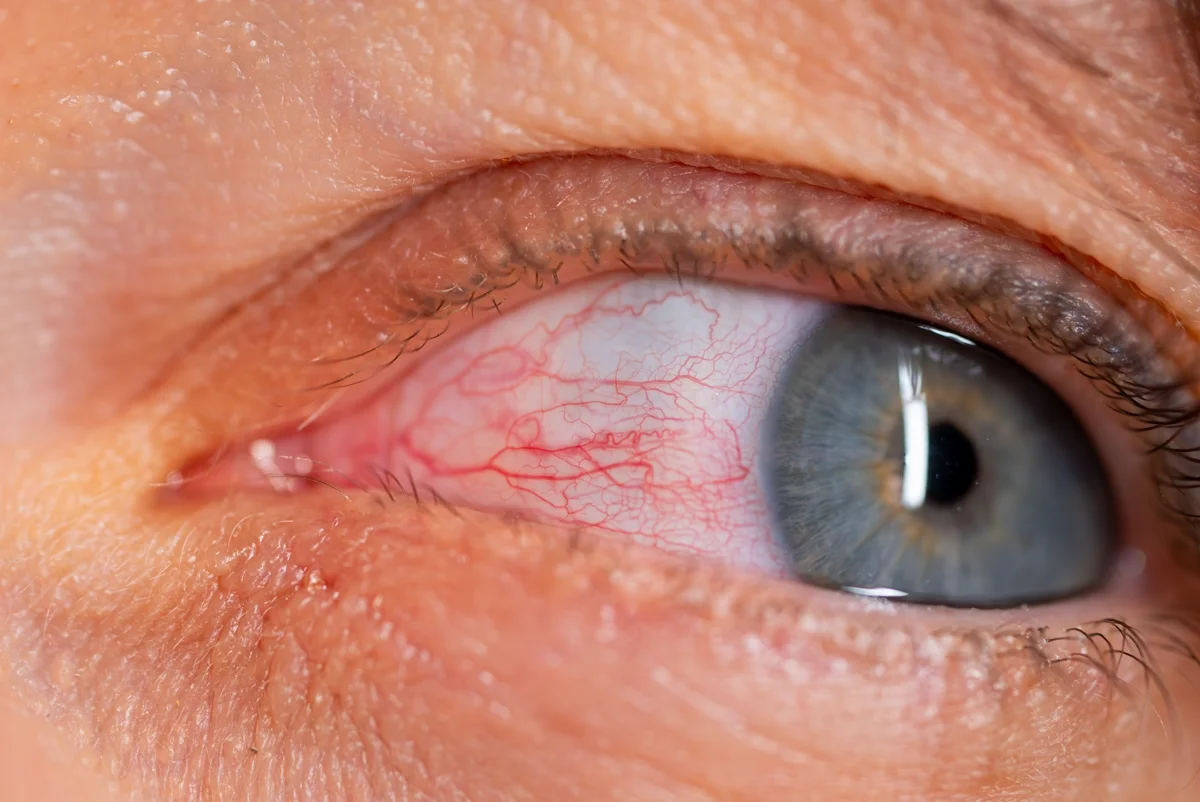
The result can look exactly like worsening dry eye: more redness, more burning, more foreign body sensation. Patients adjust their drops and doctors recommend different formulations, but the bottle continues to reintroduce the same organisms.
Preservatives like benzalkonium chloride (BAK) can partially help by preventing contamination in the bottle. However, it does little to stop the contamination that occurs as the drops leave the bottle and interact with the tip. Learn more about eye drop preservatives here.
How to Know if Your Bottle is The Problem
A useful question to ask: Do your dry eye symptoms worsen the longer you use the same artificial tears? If things tend to get worse toward the end of a bottle, contamination may be the cause. Try switching to a new bottle to see if your symptoms improve.
It's important to know that these aren't definitive tests for bottle contamination. Dry eye symptoms result from a combination of environmental and medical factors. However, if standard treatments aren't controlling symptoms the way they should, bottle hygiene may be the reason why.
What Can You Do?
Treating dry eye effectively means treating both the tear film and the surface environment. Proper eye dropper tip hygiene is essential to maintaining both.
If receiving eye drops at your physician's office, ask them if they are using single-use vials, as those are only used once and discarded which minimizes contamination.
If your physician uses multi-use drops, ask them if they use have high-level disinfection (HLD) protocols to keep their eye drops clean, such as a UV-C system like Saniteyes.
For your drops at home, consider investing in a UV-C based disinfection system to store your eye drops when they are not in use. With a system like Saniteyes Home, you can keep and store your eye drops in a sterile environment that kills contaminants in 5 minutes.
Learn more about Saniteyes' disinfection technology and how it could be right for your home or practice.
Keywords: dry eye drops bacteria, artificial tears contamination, eye drop bottle bacteria, dry eye worse, ocular surface inflammation, eye drop hygiene, preservative-free dry eye drops safety

.webp)